
What Is a Turbocharger? Complete Guide to Marine Turbochargers
A turbocharger is one of the most important components of a modern marine diesel engine. It uses energy from the engine’s exhaust gases to drive a turbine, which is connected by a shaft to a compressor. The compressor then supplies more air to the engine, allowing more fuel to be burned efficiently and helping the engine produce higher power.
For ships, auxiliary engines, power plants and industrial diesel engines, a properly operating turbocharger is essential for reliable engine performance, fuel efficiency and combustion.
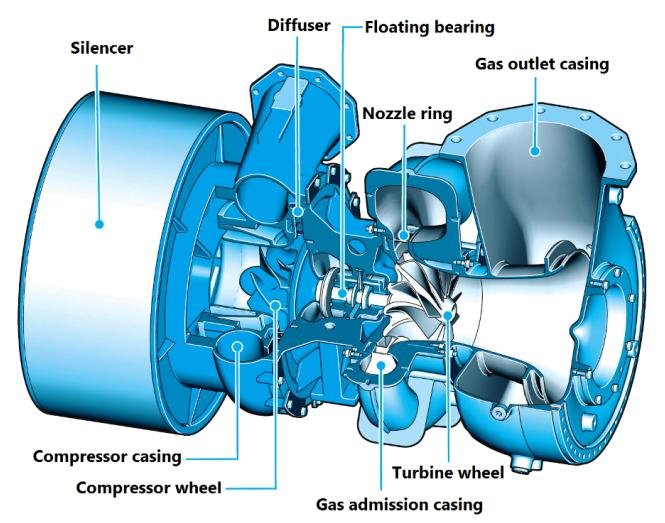
A turbocharger, also called an exhaust-gas turbocharger, is a mechanical device that increases the amount of air supplied to an engine.
The basic principle is simple:
Engine exhaust gas → Turbine → Shaft → Compressor → Compressed air → Engine
Instead of allowing all of the exhaust-gas energy to leave the engine unused, the turbocharger recovers part of that energy. The exhaust gas spins the turbine, and the turbine drives the compressor on the same shaft.
The compressor draws in fresh air, compresses it and sends it toward the engine. Because compressed air contains more oxygen in the same volume, the engine can burn fuel more effectively.
This is why turbocharging is particularly important for large marine diesel engines.
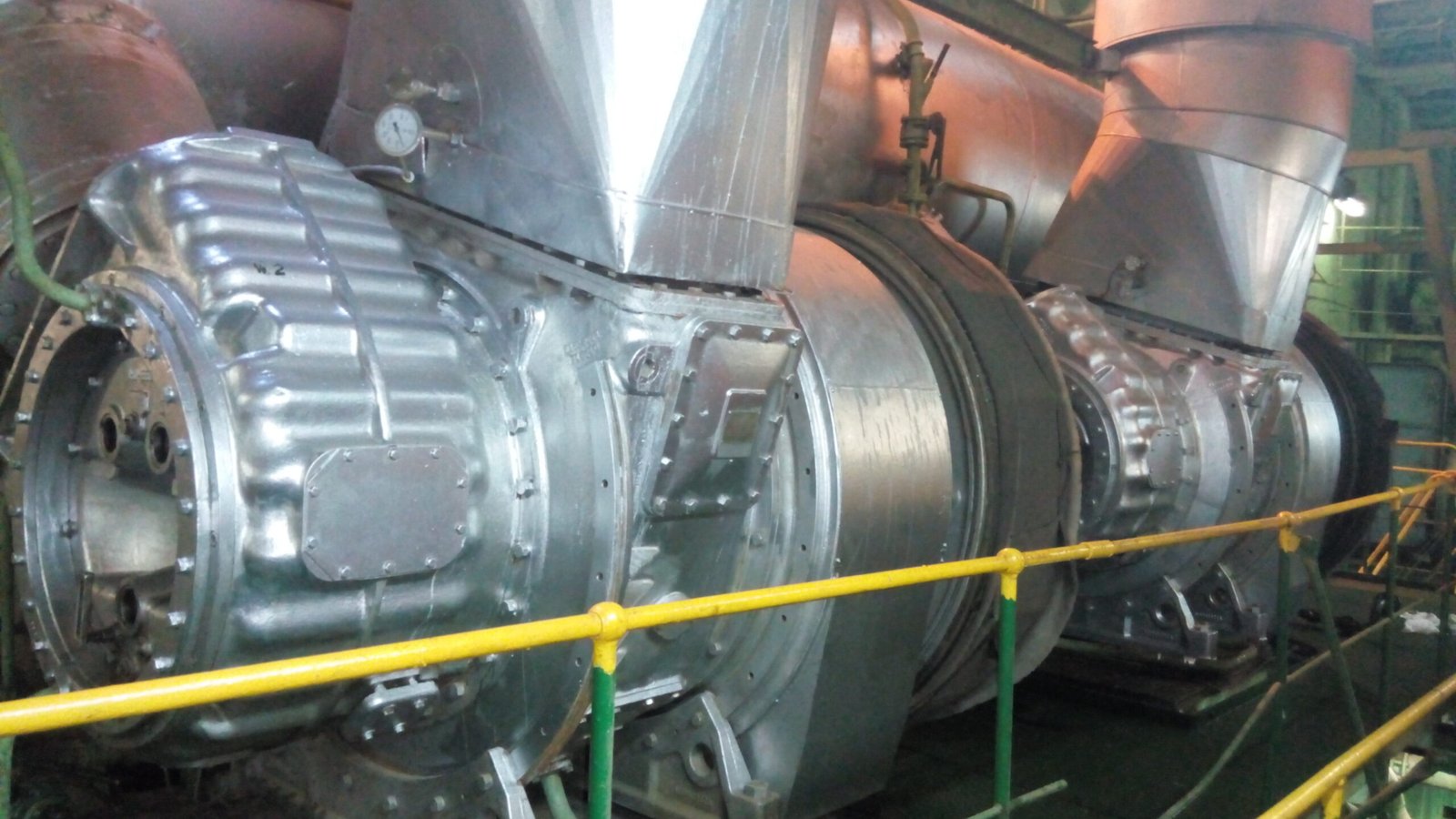
A marine turbocharger has two primary sides:
- Turbine side – hot/exhaust side
- Compressor side – cold/air side
The turbine and compressor are connected by a common shaft and supported by bearings.
Step 1: Exhaust Gas Leaves the Engine
After combustion, hot exhaust gases leave the engine cylinders.
Instead of sending this energy directly to the exhaust system, the gases are directed toward the turbocharger turbine.
Step 2: Exhaust Gas Drives the Turbine
The exhaust gas passes through the turbine inlet and nozzle arrangement, where its flow is directed onto the turbine wheel.
The turbine wheel begins to rotate at very high speed.
The turbine is therefore the part of the turbocharger that converts exhaust-gas energy into rotational mechanical energy.
Step 3: The Shaft Transfers Power
The turbine wheel is connected to the compressor wheel through a common shaft.
When the exhaust gas turns the turbine, the shaft turns the compressor at the same time.
Step 4: The Compressor Compresses Fresh Air
The compressor draws fresh air through the air inlet and accelerates it through the compressor wheel.
The compressor then increases the air pressure before it is delivered to the engine.
Step 5: Compressed Air Is Cooled
Compressing air increases its temperature.
The compressed air is therefore normally passed through a charge-air cooler / air cooler before entering the engine.
Cooler air is denser, allowing more oxygen to reach the cylinders.
Step 6: More Air Supports Combustion
With a greater supply of oxygen, the engine can burn the required quantity of fuel more effectively.
On large two-stroke marine engines, the compressed air is supplied to the scavenge-air receiver, from where it enters the cylinders.
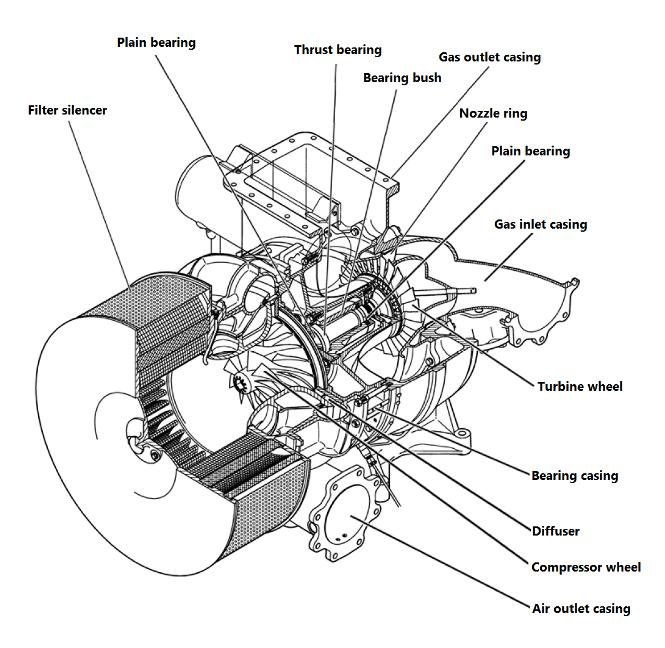
A marine turbocharger contains many precision components. The exact design depends on the manufacturer and model.
1. Turbine Wheel
The turbine wheel is located on the exhaust-gas side.
Hot exhaust gases flow across the turbine blades and rotate the wheel.
Because the turbine operates in a high-temperature environment, turbine components must be manufactured from suitable materials and maintained according to the manufacturer’s specifications.
2. Turbine Housing
The turbine housing guides exhaust gas toward the turbine wheel and controls the gas flow through the turbine section.
3. Nozzle Ring
The nozzle ring or nozzle assembly directs exhaust gas toward the turbine blades at the appropriate angle.
Its condition can have an important effect on turbocharger performance.
4. Shaft
The shaft connects the turbine wheel and compressor wheel.
It transfers the rotational energy generated by the turbine to the compressor.
5. Compressor Wheel
The compressor wheel draws in fresh air and increases its velocity and pressure.
Damage, fouling or incorrect specification of the compressor wheel can affect turbocharger performance.
6. Compressor Housing
The compressor housing surrounds the compressor wheel and helps convert the high-velocity air flow into useful pressure.
7. Bearings
Turbocharger bearings support the rotating shaft and allow it to rotate at very high speed with controlled friction.
Bearing condition is therefore extremely important during turbocharger operation.
8. Bearing Housing
The bearing housing supports the rotating assembly and contains the lubrication arrangement.
9. Sealing System
Seals and sealing rings help control oil and gas leakage between the turbocharger sections.
10. Air Filter and Silencer
The air inlet system supplies clean air to the compressor and can also reduce compressor noise.
A marine diesel engine needs a large amount of air for combustion.
Without adequate air supply, the engine cannot efficiently burn the required quantity of fuel.
A turbocharger increases the mass of air entering the engine without requiring a proportionally larger engine.
According to Cummins, turbocharging allows more air to enter the cylinders, supporting additional fuel combustion and increasing power and combustion efficiency.
For marine engines, turbocharging can therefore contribute to:
- Higher engine power
- Improved combustion
- Better fuel efficiency
- Increased air supply
- Improved engine response
- Reduced visible smoke under appropriate operating conditions
- Efficient use of exhaust-gas energy
Turbocharger in a Two-Stroke Marine Diesel Engine
Turbocharging is particularly important in large two-stroke marine engines.
The compressed air from the turbocharger is supplied to the scavenge-air system.
The basic flow is:
Turbocharger compressor
↓
Charge-air cooler
↓
Scavenge-air receiver
↓
Scavenge ports
↓
Engine cylinder
The turbocharger therefore plays a major role in supplying the air needed for the engine’s combustion and scavenging process
What Happens When a Turbocharger Is Not Working Properly?
Turbocharger problems can affect the entire engine.
Depending on the failure or operating condition, symptoms may include:
- Low scavenge-air pressure
- Increased exhaust-gas temperature
- Reduced engine power
- Increased fuel consumption
- Black smoke
- Turbocharger vibration
- Abnormal turbocharger noise
- Excessive bearing clearance
- Oil leakage
- Compressor fouling
- Turbine fouling
- Reduced turbocharger speed
However, these symptoms can also be caused by other engine-system problems.
For example, low scavenge-air pressure should not automatically be attributed to the turbocharger. Air coolers, filters, exhaust systems, fuel systems and engine operating conditions should also be investigated.
Common Causes of Marine Turbocharger Problems
Marine Turbocharger Maintenance
Turbocharger Fouling
Deposits can accumulate on the turbine or compressor side.
Fouling can change the aerodynamic characteristics of the turbocharger and reduce its efficiency.
Compressor Damage
Foreign objects entering the air system can damage compressor blades.
Even relatively small damage to a high-speed compressor wheel can become significant.
Turbine Erosion
The turbine operates in a hot exhaust environment. Depending on fuel, operating conditions and maintenance, erosion and deposits may affect turbine performance.
Bearing Wear
Bearing wear can result in increased shaft movement, vibration and potential contact between rotating and stationary components.
Lubrication Problems
Correct lubrication is essential for turbocharger bearings and rotating components.
Low oil pressure, contaminated oil or inadequate lubrication can contribute to premature wear.
Nozzle Ring Problems
Damage, deposits or incorrect clearance in the nozzle area can affect exhaust-gas flow into the turbine.
Regular inspection and maintenance are important for turbocharger reliability.
A maintenance program may include:
- Compressor inspection
- Turbine inspection
- Nozzle-ring inspection
- Bearing inspection
- Shaft inspection
- Rotor inspection
- Seal inspection
- Lubricating-oil checks
- Vibration monitoring
- Exhaust-temperature monitoring
- Scavenge-air pressure monitoring
- Cleaning according to manufacturer recommendations
The manufacturer’s maintenance instructions should always take priority because maintenance intervals and procedures vary by turbocharger model.
During routine maintenance or overhaul, different spare parts may be required depending on the turbocharger condition.
Common marine turbocharger spare parts include:
- Bearings
- Bearing bushes
- Rotor assemblies
- Turbine shafts
- Turbine wheels
- Compressor wheels
- Nozzle rings
- Sealing rings
- Labyrinth seals
- Gaskets
- O-rings
- Bearing housings
- Gas casings
- Air casings
- Service kits
- Overhaul kits
- Complete cartridge assemblies
Rotating Components
- Rotor assembly
- Rotor shafts
- Compress wheels
- Complete rotating assembly
Bearings & Bearing Components
- Journal bearings
- Thrust bearings
- Bearing bushes
- Bearing shells
- Bearing housings
- Thrust collars
- Bearing-related hardware
Turbine-Side Components
- Nozzle rings
- Turbine housings
- Gas casings
- Turbine-side sealing components
- Diffusers and related gas-flow components
Compressor-Side Components
- Compressor wheels
- Compress casings
- Air casings
- Diffusers
- Air inlet components
- Compressor-side sealing components
Seals & Gaskets
- Sealing rings
- Labyrinth seals
- Oil seals
- Gas seals
- O-rings
- Gaskets
- Packing and sealing elements
Service & Overhaul Parts
- Turbocharger service kits
- Complete overhaul kits
- Bearing kits
- Seal kits
- Gasket kits
- Maintenance kits
- Repair kits
- Complete cartridge assemblies
- Cartridge replacement units
Common Causes of Marine Turbocharger Problems
When purchasing turbocharger spare parts, shipowners and technical departments often ask for genuine, OEM or alternative parts.
These terms should be clearly confirmed with the supplier.
Genuine Parts
Genuine parts are supplied through the original manufacturer or an authorized/approved supply route, depending on the manufacturer’s distribution system.
OEM Parts
OEM means Original Equipment Manufacturer. However, suppliers can use the term differently, so buyers should request confirmation of the actual manufacturer and supply source.
Alternative / Aftermarket Parts
Alternative parts may be manufactured by companies other than the original equipment manufacturer.
For non-critical applications, customers may consider alternatives based on technical suitability, quality, certification, availability and price.
For critical components such as rotor assemblies, turbine wheels, compressor wheels and bearings, technical verification should receive particular attention.
Major Marine Turbocharger Manufacturers
Marine and industrial engines use turbochargers from various manufacturers.
Common brands encountered in marine applications include:
Different manufacturers offer multiple turbocharger series and configurations.
For example, turbocharger enquiries may involve:
ABB / Accelleron: VTR, VTC, TPL, TPS and A series
MAN: TCA, TCR, NA and NR
MHI / MET: MET series and other Mitsubishi turbocharger designs
KBB: ST, R and HPR series
IHI: RH and AT series
Napier: 5-Series, 7-Series and 8-Series
The exact availability and applicable spare parts depend on the specific turbocharger model and serial number.
How to Identify the Correct Turbocharger Spare Part
Before requesting a quotation, provide as much information as possible.
Recommended information:
Turbocharger
- Maker
- Model
- Type
- Serial number
- Nameplate photograph
Part
- Part number
- Description
- Quantity
- Drawing number, if available
- Existing component photograph
Engine
- Engine maker
- Engine model
- Engine serial number
Vessel
- Vessel name
- IMO number
- Port/location
For power plants or industrial applications, provide the plant name and location.
A clear turbocharger nameplate photograph is often one of the fastest ways to help a supplier identify the correct specification.
Marine Turbocharger Supplier in UAE
Sindhu Marine FZE is a UAE-based marine spare parts supplier supporting turbocharger spare-parts requirements for vessels, ship management companies, offshore applications and industrial power plants.
Sindhu Marine supports enquiries for turbocharger spare parts from major manufacturers including ABB / Accelleron, MAN, MHI / MET, KBB, IHI and Napier, subject to the specific model and availability.
The company supplies enquiries for items including:
- Turbocharger service kits
- Bearings
- Rotor assemblies
- Compressor wheels
- Turbine components
- Nozzle rings
- Sealing components
- Casings
- Cartridge assemblies
- Other turbocharger spare parts
Why Choose the Correct Turbocharger Spare Parts?
A turbocharger operates at high speed and under demanding temperature and pressure conditions.
Using the correct spare parts helps support:
- Reliable operation
- Correct clearances
- Proper balancing
- Efficient air delivery
- Long component life
- Reduced risk of unexpected downtime
- Consistent engine performance
For this reason, marine spare parts procurement should focus on correct identification and technical compatibility, not price alone.
A turbocharger is much more than an air pump. It is a critical part of the marine engine’s air and exhaust system, recovering energy from exhaust gases and using that energy to supply compressed air to the engine.
The basic operating principle is:
Exhaust gas → Turbine → Shaft → Compressor → Compressed air → Engine
Because marine turbochargers operate under demanding conditions, proper inspection, maintenance and spare-parts selection are essential.
If you require genuine or OEM marine turbocharger spare parts, provide your turbocharger nameplate photograph, model, serial number, part number and required quantity.
For inquiries or spare parts support, contact Sindhu Marine FZE—your trusted partner in marine engine and compressor solutions.